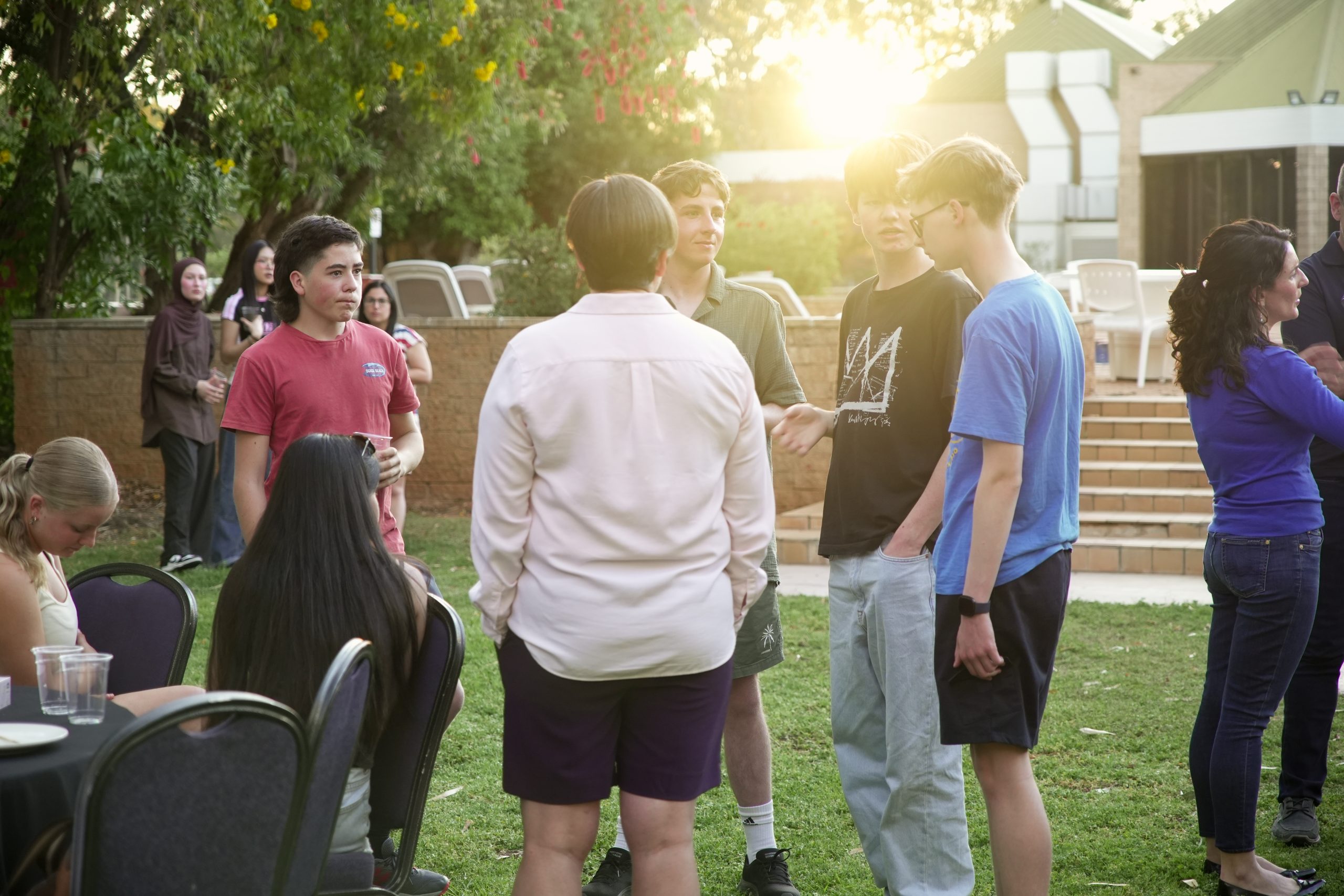
How we partner with young people

At Learning Creates, we centre young people because meaningful systems change is only possible when those most affected by the system have a genuine role in shaping it. Young people engage with our learning systems every day, giving them critical insight into what works, what doesn’t, and what needs to shift. Their lived experience surfaces blind spots, challenges long-held assumptions, and strengthens the quality and relevance of solutions.

In all our work, young people contribute as collaborators and co-designers – not consultees. This ensures that ideas for change are grounded in what genuinely supports engagement, agency, purpose and opportunity.

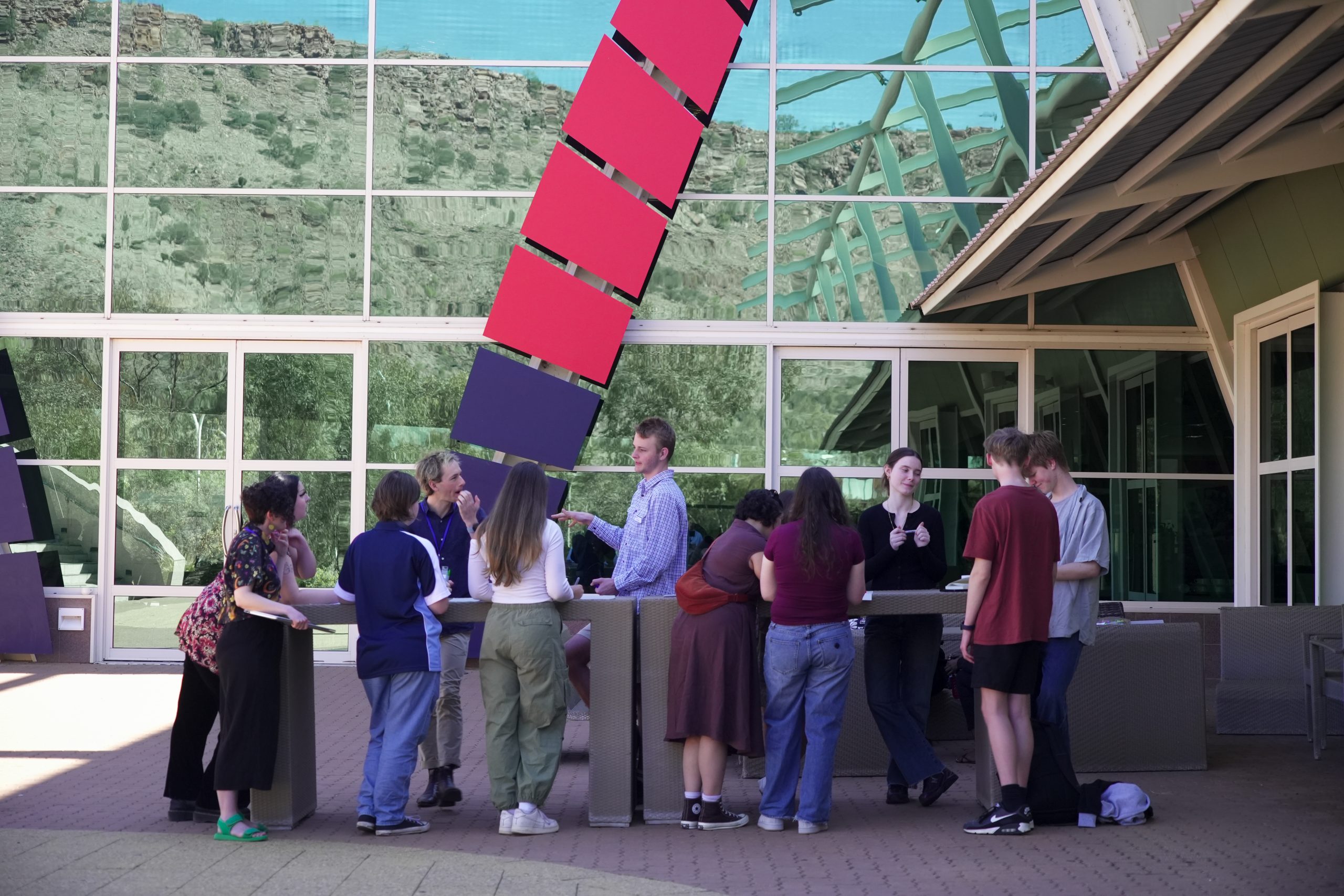
Since we began, a core principle of Learning Creates Australia has been employing young people in paid, purposeful roles – as Associates: co-researchers, facilitators, communicators and advisors.
Watching the associates work with our students was extraordinary, was really powerful. I can’t think the way associates can think but I also can’t relate the way associates can relate. So that combination was super powerful…and I think our young people who are traditionally not heard and expect not to be listened to, they really valued it.

Partner Educator

[Learning Creates] really… care about young people and that’s what sets them apart, because lots of people say they care, but then they don’t show it. They talk the talk but they don’t walk the walk, whereas Learning Creates do the work, put in the work and they walk the walk.

Community Associate

I’ve always had a very big belief that young people have to have a primary seat at the table, but I think the way in which Learning Creates has done that has consolidated knowledge around that and how to include them without putting your own perspective on things, so how to make sure it’s a genuine inclusion.

Partner Educator

[Learning Creates] acknowledges and knows that they aren’t the ones who should be doing this research and this work needs to be done by mob for mob… It takes a lot of humility for a business to be able to even make that recognition in the first place because I’ve worked in other places where that just isn’t the case.

Community Associate

They built up our skills capacity and then recognised that we had those skills… and created a really positive working environment where we could bounce off each other and work in an intergenerational space.

Community Associate

They recognise what someone may be really good at and confident with, and then put them in an area where they can flourish.

Our Associate Model

We employ and partner with young people aged 15–25 from diverse backgrounds and lived experiences as casual staff members. They work with us on:

  • Research and co-design projects
  • Youth-led communications and storytelling
  • Community and systems-change initiatives with schools, systems and tertiary bodies

Our approach is built around five key elements that young people identified as most important:

#1

Recognising voices and abilities

#2

Prioritising the needs of the whole person

#3

Leadership, agency and independence

#4

Supporting Diversity

#5

Strengthening connections

Safety, Safeguarding and Support

Because we work with young people on complex, sometimes confronting systems-change issues, safety is built in from the start. Over many years of working with young people we have developed and refined strong safeguarding measures, including:

  • A safeguarding culture and a Commitment Statement that clearly sets out what young people can expect from us – around safety, respect, agency, voice and honesty and how we will hold ourselves accountable.
  • Staff trained in Youth Mental Health First Aid, so the team is better equipped to recognise and respond when young people are experiencing mental health challenges.
  • Paid, confidential coaching for associates that covers their whole lives – not just project tasks – giving them a trusted adult to reflect with, debrief and ask for help.
  • Additional specialist support where needed, such as partnering with First Nations-led mental health organisations for First Nations associates working with confronting content.

Associates told us this support helped them stay well, learn from mistakes and keep their “spark for change alive” in demanding systems-change work.
Discover More About Our Approach
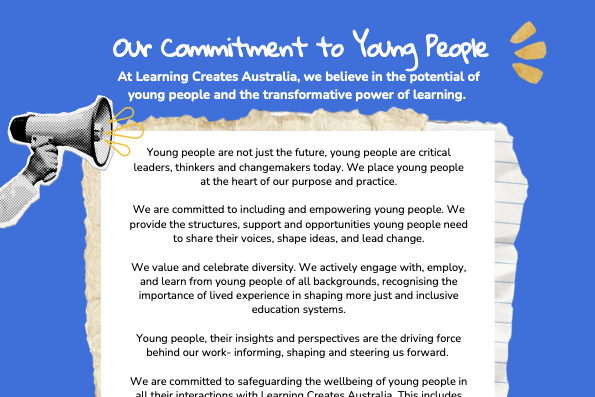
Our Commitment to Young People

December 1, 2025

Working with young people at Learning Creates Australia: our approach and impact

December 1, 2025

Explore the Community Associates’ Work


Letter to the System

Letter to the System is a powerful, youth-led short film reflecting the findings of The Power of Recognising More research. Featuring lived experiences, this film highlights why our education system is no longer fit for purpose, what systemic change is needed, and what a truly equitable future of learning could look like.


WAM Podcast

Youth focused and motivated, the We Are More podcast explores the future of the education space. What changes are occurring? What does the future look like? Traversing on the topic of broader learning recognition and equality, we interview guest from all levels of the education system to learn more! Keep up to date with all our episodes! Hosted by Ellie, Megan and Jay 🎧🎤


Cycle 2: The Whole Learner

Co-led by young people and with the University of Western Sydney Young & Resilient Research Centre, the report shares young peoples experiences and desires for an education system that moves beyond narrow academic results to better recognise their whole selves. It shows how broadening recognition for students from disadvantaged backgrounds can break barriers, reduce stigma, and boost resilience and self-esteem.


Future Healthy Countdown 2030: Young People, Wellbeing and Learning

Published in the Medical Journal of Australia’s Future Healthy Countdown 2030 supplement, this article draws from research in our youth-led Cycle 2. Co-authored by Young Associates Mietta Symmons-Joyce, Linh Dang and Charlie Connell-Tobin with the Young and Resilient Research Centre, it explores how learning recognition systems shape young people’s wellbeing, identity and connection – showing how broader recognition can strengthen belonging, confidence and post-school pathways.


Cycle 4: Characteristics and Case Studies Supporting First Nations Learning Success

Co-authored by Dr Josh Cubillo with young researchers Alyssa Richardson and Anjali Ali, and guided by a First Nations Steering Committee, this literature review explores what makes learning environments strong for Aboriginal and Torres Strait Islander students. It identifies the characteristics that foster belonging, wellbeing and engagement, showcasing programs that elevate Indigenous knowledge, relationships and self-determination across the continent.


Working with young people at Learning Creates Australia: our approach and impact

This report is a overview of our young person approach – what we do, how we work with young people, and what they say about the experience. It highlights the principles that shape our engagement, the outcomes young people report, and why this work matters. The overview draws on an associate-led evaluation and impact report researched and written by three young associates (Heidi, Tilly and Ava).


SkillSpark Explainer Video

Meet Bentley as we dive into what the SkillSpark pathway is and why it exits. SkillSpark is currently being piloted and co-developed between the Universities Admissions Centre, the Victorian Tertiary Admissions Centre and Learning Creates Australia. Find out more at learningcreates.org.au/skillspark