
AI is rapidly reshaping education, yet there is limited understanding of how learners actually use AI tools, and the potential opportunities and inequities they may create.
AI, Equity and the Future of Learning is a youth co-led research initiative delivered by Learning Creates Australia and Western Sydney University’s Young and Resilient Research Centre. The project aims to establish a clear Australian baseline of how young people are using and experiencing AI for learning, and translate these findings into practical guidance.
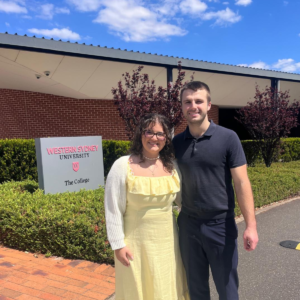
The project elevates young people as co-researchers and partners. We spoke to two of the project’s co-researchers, Victoria Tsobanis and Kahlil Grocott, about what this work means to them.
Q: Why does this focus on AI, equity and the future of learning feel pressing right now?
Kahlil: “I’ve been thinking about this a lot, particularly because of another project I’m involved with through Learning Creates – the Castlereigh Statement – which involves a group of educators and people from across the Australian education system working together on AI in the learning space. One of the things that the K-12 stream of Castlereigh has been talking about is the importance of bringing youth voice into their understanding of what needs to change – and not just the perspectives of the most privileged. That’s why I see this research project as important because we need marginalised voices to be intentionally heard in this conversation, not just the same voices making the same mistakes forever.”
Victoria: “Totally. With the complexity of how fast AI is changing, the easier route is to reach out to the people you already speak to. But the conversation might be lacking the people that actually are being affected by this and whose voices we don’t hear.”
Q: Your fieldwork phase has just begun, what are you most looking forward to in your conversations with young people?
Victoria: “I’m just excited to actually challenge my own pre-conceptions. Because we are so deep in the project already with the literature review, and you subconsciously pick up things from other projects. I want to go into these workshops and interviews and hear what these young people have to say.”
Kahlil: “I’m just excited to be speaking with young people. We found that there is essentially no research, especially in an Australian context, that works with young people to actually gather their opinions and create an understanding of what AI and learning looks like in their context. We are doing a research project going through regular ethics standards, but doing it in a way that employs more co-design principles so it’s collaborative work and not just a questionnaire.”
Q: This project also brings together an Advisory Circle of experts in AI, learning and equity. How has this group shaped your understanding of this work so far?
Victoria: “It’s been so fantastic to have this group of people who have come together to genuinely make a difference and listen to what young people are saying. At one of the workshops I remember dropping into a few different conversations and all of them were specifically mentioning the importance of young people’s ideas and perspectives. That is kind of rare, it’s just a really lovely setting to be in.”
Kahlil: “I totally agree. The people who come to these advisory circles are so keen to engage with young people where they are at. And for some, this process has turned them into converts where they really want student voice to be part of everything, which is so cool. We’re working with people who believe in youth voice as a genuine method of change, not just a tick-box.
Q: What types of impact do you hope to see from this project?
Kahlil: We spent a lot of time getting this project ethics-approved and it will eventually be peer-reviewed and treated as an actual academic paper, as well as the other final products. That has the potential to change the conversation in a way where other projects doing literature reviews later on will find a piece of work that actually includes the voices of young people without being funnelled through layers of bureaucracy. It makes the process rewarding and it makes the process in itself a meaningful way to change the conversation.”
Victoria: Yes, the process is a big part of it for me too. I want all the young people that we recruit to be like, ‘wow, I can make a difference.’ I want them to understand that they can advocate for themselves and their peers.”
–
We look forward to sharing updates in AI, Equity and the Future of Learning over the coming months.